
Financial advice on housing is fragmented. The push toward sustainability is making this painfully clear.
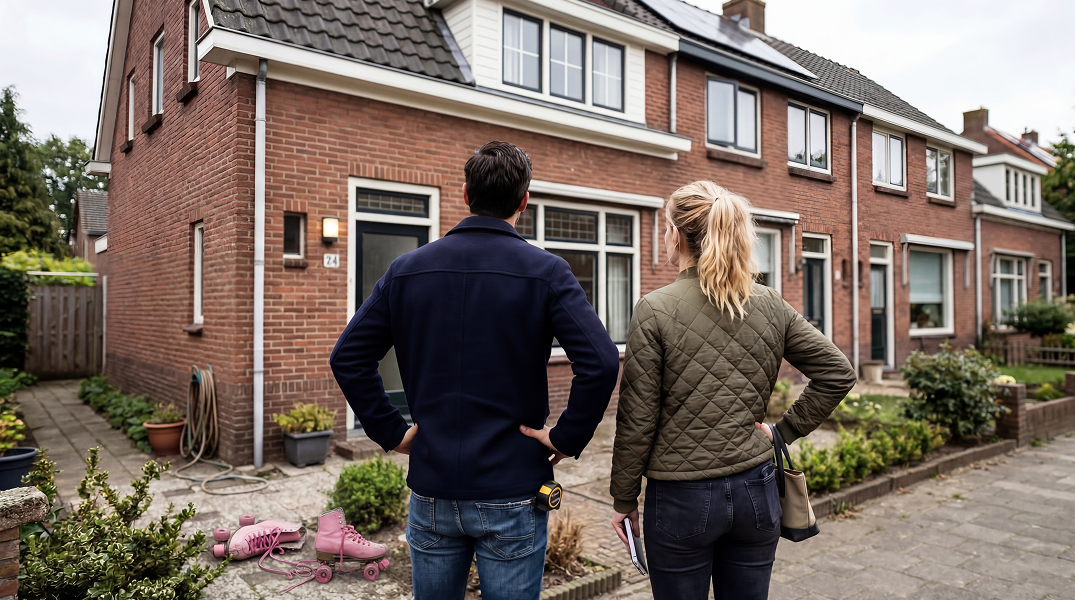
Housing prices are rising. Mortgage rates are rising along with them. So is the required down payment. For first-time homebuyers, this often means one thing: going all-in on the house. Professor Brounen recently analyzed the consequences of this in AMweb. Saving for retirement? Later. Insurance? Later. Making the home more sustainable? First, just buy it. His conclusion: financial guidance regarding housing is structurally fragmented. The mortgage dominates the conversation. Everything else fades into the background.
He’s right. But the problem extends beyond first-time homebuyers alone.
Nobody buys a house to get stuck
For many people, buying a home is the biggest financial decision they’ll ever make. Yet professional guidance ends the moment the keys are handed over.
The mortgage advisor disappears. What remains is a household that has to figure out on its own how to manage its biggest asset. Which investments are smart. What the returns are. How the choices are connected. No one buys a home just to get stuck afterward.
Those with money get a plan. The rest get monthly bills.
Take sustainability measures, for example. For many households, this is the biggest financial decision after the mortgage itself. But who actually keeps an eye on the big picture? The mortgage advisor is gone. The bank focuses on the bill. The subsidy programs focus on the regulations. The installer focuses on the installation. No one looks at the whole picture.
Wealthy households often receive financial advice early on—with a plan for their assets and the long term. The middle class has to piece everything together on their own. That is the real problem.
Financial decisions related to housing have become isolated islands. While a home is, of course, a single entity. The energy bill. Your monthly expenses. What you pay now. And what you’ll have left later. Everything is interconnected. But the big picture? It doesn’t exist.
Uncoordinated decisions are costly
Pien and Joost are insulating their home because their energy bills are rising. Two years later, they install solar panels. Then a heat pump. Logical steps. But lacking cohesion.
If you calculate all the measures at once, you’ll see different numbers than if you look at them one by one. The question shifts from “Can I afford this?” to “Is this a smart investment in my home?”
Then, making your home more sustainable goes from “yikes, expensive” to “actually, it makes sense.”

Life events call for financial advice. So does sustainability.
A wedding. A child. Retirement. At moments like these, you expect help. Someone to guide you through it. What does this mean for your finances? Banks, advisors, and insurers have entire teams dedicated to this.
But going green? That’s another one of those moments. For many households, it involves tens of thousands of euros. With years of impact on energy costs and home value. A choice tied to subsidies, loans, taxes, and future regulations.
Yet when the installer presents their quote, there’s no one standing by your side.
AI finally makes financial advice accessible to everyone
There has always been a divide. Those with sufficient means had access to advisors who saw the big picture. The rest Googled, asked friends, or did nothing.
That divide wasn’t caused by a lack of willingness, but by cost. Good financial advice was expensive, time-consuming, and scarce.
AI is fundamentally changing that. For the first time, it’s possible to give every household unbiased, comprehensive, and affordable insight into their financial situation. Not as a privilege for those who can afford it, but as the standard for everyone.
The question is: where do you start? Investing? Taxes? Retirement?
Start close to home. Literally
The most concrete, most urgent starting point is closer to home. Literally. For most Dutch households, their home accounts for 60 to 70 percent of their total assets. And the moment when they make the biggest financial decision regarding those assets, aside from their mortgage, is when they make their home more sustainable.
Those who see the big picture at that moment—what it yields each month, how subsidies and financing work together, what it means for the home’s value—will make a different decision.
That is the opportunity. The real gain? Not building yet another tool. But finally making financial advice accessible to many more people.
Prets is setting that new standard
That’s exactly what Prets builds. We believe that making a home more sustainable isn’t just a quick fix, but a major financial decision. A moment when people need clarity. And that’s exactly what’s often missing right now.
That’s why we don’t create an extra service desk or a complicated advisory process. We build financial clarity right into the moment that matters most: the installer’s quote. What does this mean per month? What are the returns? How do subsidies and financing work together? And how will this affect your home’s value in the future?
Every. Single. Doubt. Eliminated.
That may sound simple. But for many households, it changes the entire decision. Making your home more sustainable no longer feels like “yet another big expense,” but like a logical investment in your home.
AI makes it possible to offer that insight in a scalable and affordable way. Not just for people with a financial advisor on speed dial. But simply for anyone who wants to live smarter.
Sustainability is the beginning. The home is the starting point. Finally, the middle class is getting access to financial insights that really help.
Ready to go green?
Check your eligibility and start financing your sustainable upgrade today.